


Threaded with glass: The radiant role of beads in Kalotaszeg Maiden Regalia

In March I got photoshooted in a traditional folk costume of the Kalotaszeg region (Transylvania). It stands out as one of the most visually spectacular expressions of Hungarian rural culture as it is a maiden dress (kalotaszegi leány viselet).
I love that voluminous pleated skirts (muszuly) and striking geometric írásos (written) embroidery that catch the eye from afar, it is the meticulous, heavy use of beaded ornamentation that truly elevates this attire into the realm of wearable sculpture.
Far from mere decoration, beads (gyöngyök) in Kalotaszeg were a declaration of youth, social status, and communal pride.
The Crown of Maidenhood: The Gyöngyös Párta
The most crucial, complex, and heavily beaded element of a young girl's wardrobe was the gyöngyös párta (peaked beaded crown). Reserved strictly for unmarried girls from their confirmation (around age 13) until their wedding day, this rigid, horseshoe-shaped headdress frames the face and arches majestically toward the back.
Anatomical Splendor of the Crown

The base construction relies on layers of stiffened cardboard or birch bark covered in red cloth. This surface is packed so densely with beads that the underlying fabric is completely obscured.
The Bosses (Bunkók): The most distinct visual features are the raised, semi-spherical projections or knobs protruding from the crown's surface. Master artisans build these up using padding, wrapping them tightly in strands of tiny white seed beads and larger glass faux-pearls (Tekla gyöngy).
Mirrors and Sequins: Nestled between the beaded bosses are tiny mirrors (tükördarabkák) and metallic sequins (flitter). These catch the light during church processions or traditional dances, creating a dazzling shimmer meant to symbolise purity and ward off the "evil eye."
The Beaded Fringe: The bottom rim touching the forehead is typically finished with a scalloped edge or a tightly strung fringe of white seed beads, softening the heavy structure against the maiden's brow.
Ornamental Layers: Necklaces and Accents
Beyond the crown, glass beads spill over onto the body, adding weight, texture, and rhythm to the silhouette of the young woman.
The Lázár-gyöngy (The Beaded Collar)
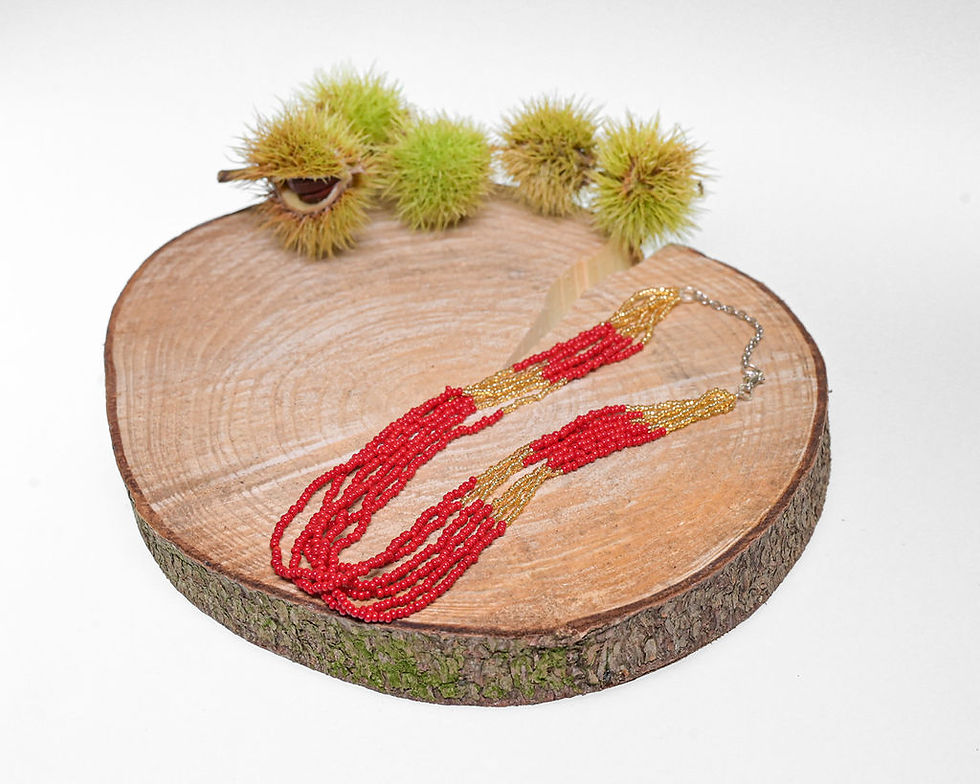
Maidens layered dozens of tight rows of necklaces around their necks. The most prized among these was the lázár-gyöngy, a multi-strand choker made of blown glass beads, often coated in an iridescent or metallic silver-gold finish. These heavy layers sat flush against the stiffly starched, unembellished collar of the linen shirt, contrasting beautifully with the intensely embroidered sleeves below.
Bodice and Belt Accents

While the vállfűs ing (shirt with embroidered shoulders) relied primarily on cotton threadwork, the matching velvet vests (pruszlik) worn over them during cooler months frequently incorporated beadwork. Tiny seed beads were traced along the edges of the vest patterns, reinforcing floral motifs alongside metallic gold braid (sujtás).
Similarly, the waistline—where the heavy, turned-up muszuly skirt met the bodice—was secured with woven sashes that occasionally featured tasseled, beaded ends swinging gracefully with the dancer's movement.
Material and Meaning: The Economics of Sparkle
The heavy reliance on glass beads in the late 19th and early 20th centuries tells a story of trade and prosperity. Kalotaszeg’s proximity to major trade routes allowed villagers access to imported Venetian, Bohemian, and Czech glass beads.
Because beads were a commercial luxury item rather than home-spun material, the sheer volume of beadwork on a girl's costume served as an explicit indicator of family wealth. A heavily encrusted párta featuring larger, flawless imitation pearls and imported mirrors was an expensive investment, often passed down through generations or meticulously reworked by specialized craftswomen.
Legacy of the Craft

The beaded heritage of Kalotaszeg is not a dead museum tradition. Today, contemporary folk artists and local preservationists continue the painstaking art of stringing and stitching pieces by hand such as Tulipane Design. We make sure the tradition remains a vivid testament to how a community can take simple elements of glass and thread and weave them into an immortal symbol of cultural identity.
If you want to explore further, and make your own embroidery piece, register to our creative workshops.
Bisous,
Edith


Comments